
Support Portal
Discover our Support Portal, your one-stop destination for accessing essential resources such as brochures, product datasheets, operation guides, and more.
Explore
Pilot Wireless Network

Small Cell

Drive Test/Outdoor Test

Indoor Test

Autonomous Measurement

Laboratory Automation

Post Processing

Drone-based Testing
Dingli's Pilot Wireless Network Solution is instrumental in ensuring seamless signal transmission between base stations and mobile devices. This cutting-edge solution is tailored to improve the performance, reliability, and efficiency of wireless networks, delivering enhanced network quality and user experience.
Read More Find the related productsSmall Cell Networks power the next wave of wireless innovation, delivering high-quality, reliable connectivity for demanding environments like smart enterprises and hospitals
Read More Find the related productsDingli's LTE drive test solutions give mobile operators real-world visibility into outdoor 4G and 5G performance, measuring coverage, signal quality, throughput, handover and service experience along defined test routes.
Read More Find the related productsIndoor cellular coverage tester solutions evaluate and optimize networks in malls, hospitals, offices, residences, schools, and underground parking lots.
Read More Find the related productsAutonomous Measurement uses advanced tools to monitor and validate network performance, streamlining evaluation and reducing manual effort.
Read More Find the related productsLab test solutions verify 4G/5G performance and reliability before deployment, ensuring every component meets the highest standards
Read More Find the related productsDingli provides cutting-edge Post Processing solutions and a powerful software platform for network analysis and benchmarking, maximizing performance and reliability.
Read More Find the related productsDingli Drone-Based Testing is an automated solution designed for the emerging low-altitude economy, enabling precise 5G vertical coverage analysis.
Read More Find the related products
Enables seamless smart applications, reliable connectivity, and enhanced driving safety

This cost-effective NB-IoT testing and eMTC testing solution includes essential measurements, signaling tests, failure alarms, and post-processing.

Measure QoS and QoE for all OTT applications and services

Accelerate digital transformation with 5G private network testing that improves reliability, efficiency and productivity.

Measures and analyzes network performance for low-altitude cellular networks

Verify QoE in 5G networks with a scalable multiple network benchmarking solution and ensure the competitiveness of your network.

Increase the efficiency of your site verification and accelerate your 5G roll-out

Ensure network quality and end-user satisfaction of wireless networks with professional in-building measurement

Automated VoLTE testing gives mobile voice service providers an end-to-end way to measure voice quality and improve customer experience.

Ensure the performance of your 5G network indoors, benchmark your network against competitors

Dingli enhances outdoor network coverage with advanced 4G-5G RAN solutions, bridging the digital gap for urban and rural areas.

Dingli's Private Network Solutions offer secure, customizable, and efficient wireless communication for businesses, enhancing connectivity and operational efficiency.

Dingli's IoT Solutions offer innovative and scalable Internet of Things technologies, enabling smart connectivity and data-driven insights across various industries.

FWA, Fixed Wireless Access, provides high-speed broadband internet via wireless communication, bridging the digital divide in underserved areas.

Dingli excels in Indoor Network solutions, merging 4G reliability with swift 5G speeds for seamless mobile coverage in businesses and public spaces.

Elevator Networks, designed for elevators, uses 5G for high-speed connectivity, real-time monitoring, and seamless communication.

Over the past two decades, telecom networks have evolved from voice-centric systems into highly complex, service-driven digital infrastructures. With the transition from 4G to 5G, networks are now expected to support ultra-high data rates, low latency applications, and diverse service scenarios ranging from enhanced mobile broadband to mission-critical communications.
In this context, ensuring network performance is no longer limited to measuring radio signals—it requires a comprehensive understanding of both network behavior and user experience.
As a result, network testing methodologies are evolving. While drive testing in telecom continues to serve as a foundational practice, new approaches are emerging to extend its capabilities and provide deeper insight into real-world service performance.
Drive test in telecom refers to the process of collecting real-world network performance data by moving through a defined geographic area using vehicles equipped with specialized testing tools and user equipment.
It plays a critical role across the entire network lifecycle, including:
By capturing key metrics such as signal strength (RSRP), signal quality (SINR), throughput, and latency, drive test tools provide highly accurate, location-based insights into network performance.
Even in the 5G era, drive testing remains one of the most reliable and essential methods for evaluating network quality in real-world environments.
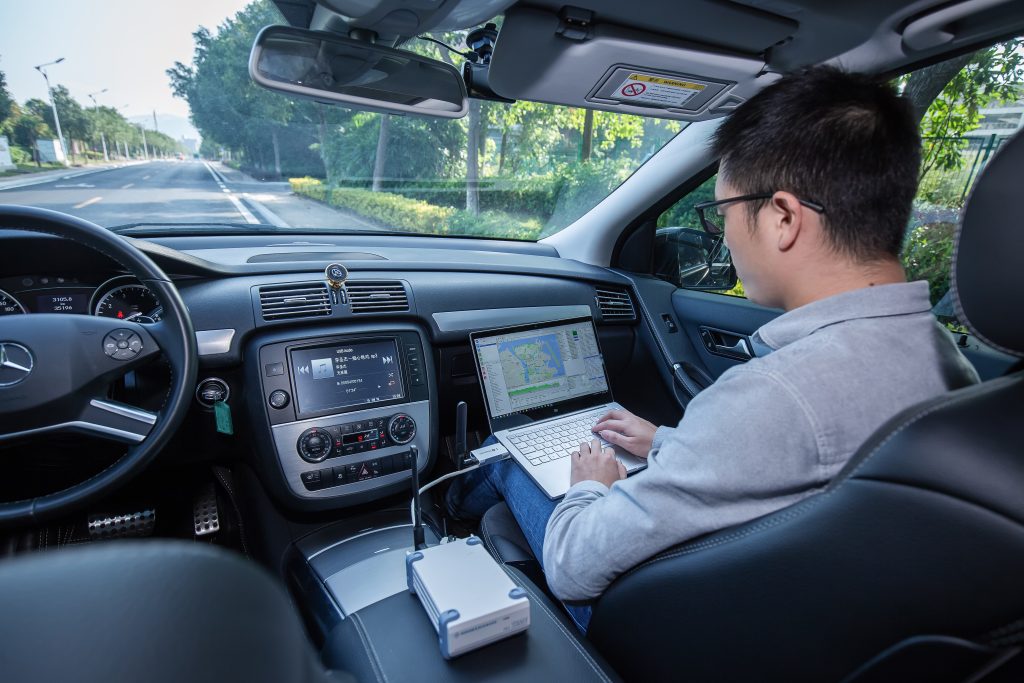
Drive testing continues to be the backbone of telecom network validation, offering unmatched precision and control in performance measurement.
Drive testing enables operators to identify weak coverage areas, handover issues, and signal inconsistencies across diverse environments.
It provides precise measurement of key performance indicators, including RSRP, RSRQ, SINR, throughput, and latency.
Operators can compare network performance against competitors under consistent testing conditions.
Drive testing allows for repeatable and controlled test scenarios, ensuring reliable data for optimization decisions.
In essence, drive testing delivers the engineering-grade accuracy required for network deployment and optimization.
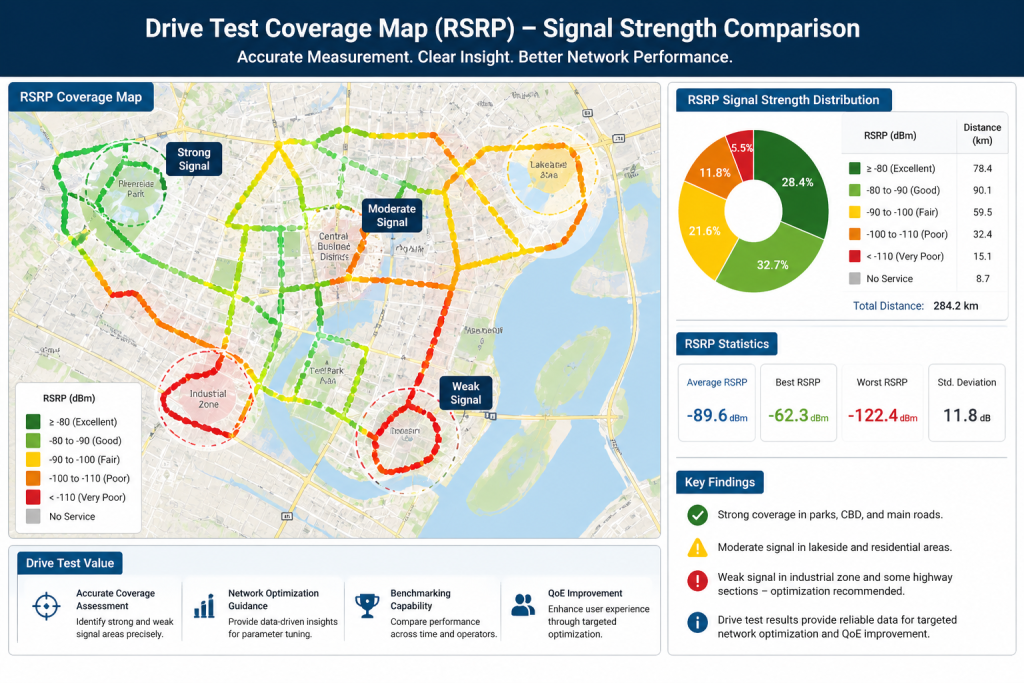
While drive testing remains foundational, the scope of network performance evaluation is expanding in response to evolving network complexity and user expectations.
Modern telecom networks require:
This shift does not diminish the role of drive testing. Instead, it reflects a broader industry evolution:
From network-centric measurement to experience-centric assurance
To complement the high-precision insights provided by drive testing, operators are increasingly adopting lightweight, user-centric testing approaches.
These approaches are designed to extend testing capabilities beyond traditional methods, focusing on real user experience and flexible deployment.
Explore lightweight Testing Solution
Lightweight testing solutions enable operators to:
Unlike traditional drive testing, which provides high-accuracy snapshots, these approaches offer agile and continuous insight into user experience.
Together, they enhance the overall visibility of network performance across both technical and experiential dimensions.
In the 5G era, achieving a comprehensive understanding of network performance requires a combination of complementary approaches.
An effective strategy integrates:
| Approach | Strength | Role in Network Testing |
| Drive Testing | High accuracy, controlled environment | Foundational validation |
| Indoor Testing | Detailed indoor insights | Scenario-specific optimization |
| Lightweight Testing | Flexibility, real user experience | Rapid validation & QoE monitoring |

By combining these approaches, operators can bridge the gap between:
Drive testing continues to serve as the backbone of performance validation, while lightweight testing provides an additional layer of real-world service insight.
The transformation of network testing is closely linked to advancements in telecom technology.
Introduce new complexity in signal behavior and coverage patterns.
Requires service-specific testing and validation.
Enables automated analysis of large-scale testing data.
Shifts testing from periodic validation to continuous assurance.
These innovations further reinforce the need for integrated and adaptive testing strategies.
To effectively manage network performance in the 5G era, operators should consider:
Ensure accuracy and reliability in network performance measurement.
Capture real user experience across diverse scenarios.
Support fast validation cycles during deployment and optimization.
Combine multiple approaches for comprehensive insight.
The role of network testing is evolving beyond data collection toward experience assurance.
Future trends include:
The ultimate goal is not just to measure network performance, but to ensure consistent and high-quality user experience.
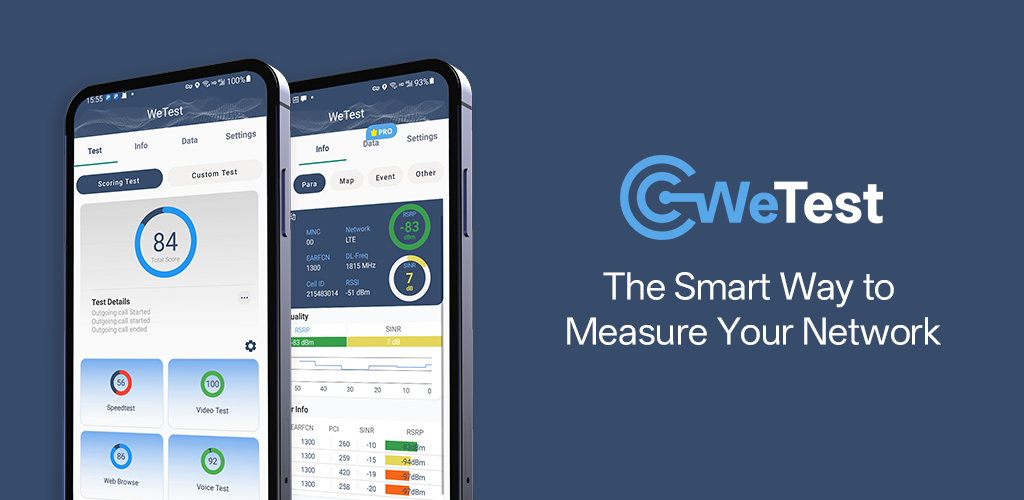
Drive testing remains a cornerstone of telecom network optimization, providing the precision and reliability required for engineering validation. As networks become more complex and user expectations continue to rise, testing strategies must evolve accordingly.
Lightweight, user-centric testing approaches extend the capabilities of traditional drive testing, enabling operators to quickly validate service performance and gain deeper insight into real-world user experience.
Together, these approaches form an integrated testing framework that combines accuracy, flexibility, and scalability—supporting more efficient and user-focused network operations in the 5G era.
Looking to enhance your network testing capabilities?
Explore our solutions | Request a demo | Learn more about lightweight testing approaches


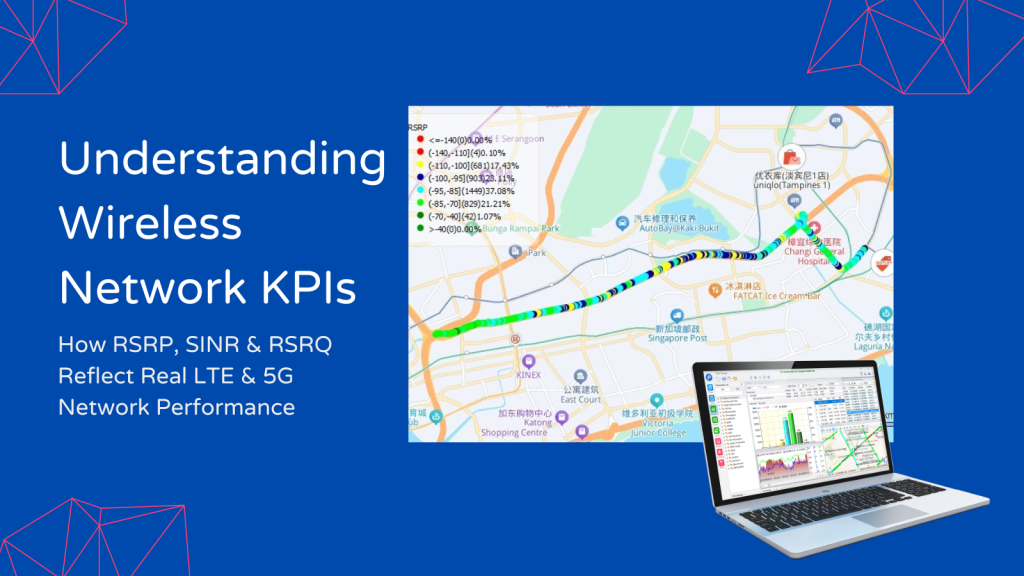

If you are interested in our services or need customized solutions, please feel free to contact us
Contact UsComplete the form below to have a sales person address your business needs.

